News

A plant worth knowing each month, and short notes on why native plants do what they do.

Did you know?: Insects are attracted to flowers depending on colour

September 2026

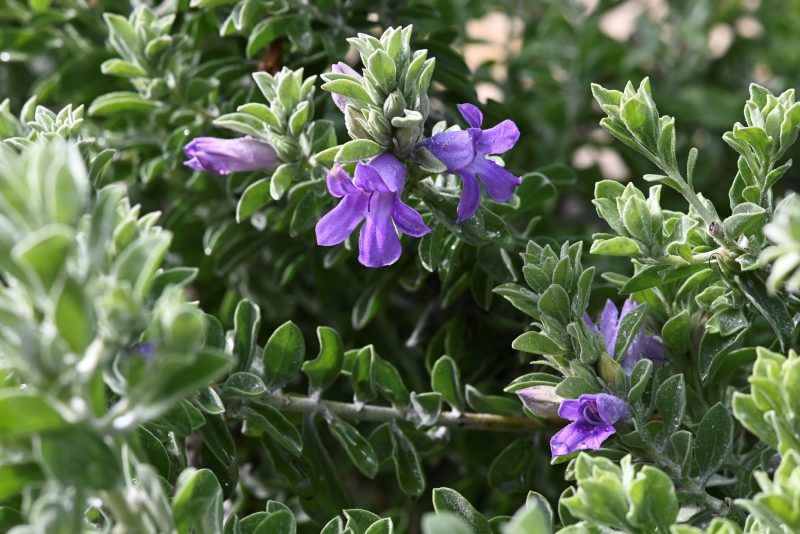
Blue-flowered Eremophila species (such as Eremophila Mackinlayi) attract bees because insect vision is highly sensitive to blue, violet, and ultraviolet light. Conversely, bees are essentially color-blind to red wavelengths, making blue flowers stand out as prime targets for native and introduced bee species.

Red-flowered Eremophila species (such as Eremophila 'ruby red') target birds like honeyeaters, which possess specialized avian vision that easily detects red and orange wavelengths against green foliage. These plants co-evolved with birds to advertise the large nectar rewards required to fuel high-energy avian pollinators.

This distinct color divide prevents competition between pollinators and ensures efficient plant reproduction. By utilizing specific colors, different Eremophila species ensure their pollen is carried by the most effective visitor—birds for red flowers and bees for blue."
Native plant of the month: Calothamnus quadrifidus

September 2026

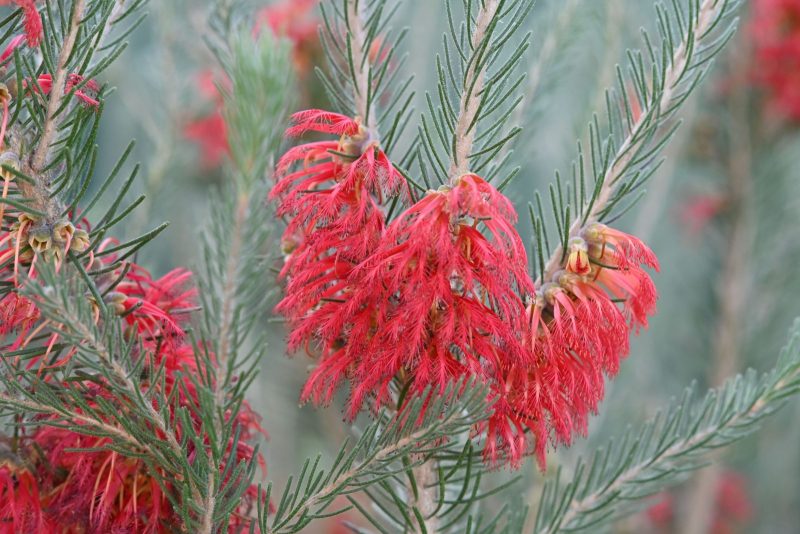
Calothamnus quadrifidus, commonly known as the one-sided bottlebrush, is a hardy shrub endemic to Western Australia. It typically grows to a height and width of 1.5 to 2.5 metres, featuring soft, pine-like foliage and vibrant red, brush-like flowers that cluster predominantly along one side of its stems. Blooming primarily from spring through to early summer, these striking flowers are highly attractive to native nectar-feeding birds and insects, making the plant a cornerstone for supporting local biodiversity.

Adaptable and very fast-growing, this species thrives in a variety of soil types and is exceptionally drought-tolerant once established. Its dense growth habit and robust root system make it an excellent candidate for ecological restoration projects, including dense planting frameworks like the Miyawaki method. Whether utilised as a resilient windbreak, a natural screen, or a primary habitat builder, it remains one of the most versatile and reliable components of a native water-wise landscape.